E-commerce is no longer just about great product photos. In 2026, the brands winning on social media are the ones that make their audience feel something — and nothing does that better than authentic, creator-style content showing a real (or realistic-looking) person holding your product.
The problem? Traditional UGC shoots cost thousands of dollars, take weeks to arrange, and require constant reshoots every time your product changes or a new campaign launches.
That's exactly why AI-powered product-in-hand content is changing everything.
The Old Way Was Expensive and Slow
Before AI content tools existed, a typical UGC campaign looked something like this:
- Source 5–10 creators through a platform
- Send them physical product samples (2–3 weeks shipping)
- Brief each creator, negotiate rates, sign contracts
- Wait for content delivery (often delayed, often off-brand)
- Receive 10 videos — 3 are actually usable
- Pay $2,000–$10,000 for those 3 clips
That's an entire month of work for a handful of assets. And if your product changes? Start over.
For small brands and startups, this model is simply out of reach. For larger brands, it's a bottleneck that slows every campaign launch.
What AI Product-in-Hand Content Makes Possible
Here's what the new workflow looks like with an AI influencer:
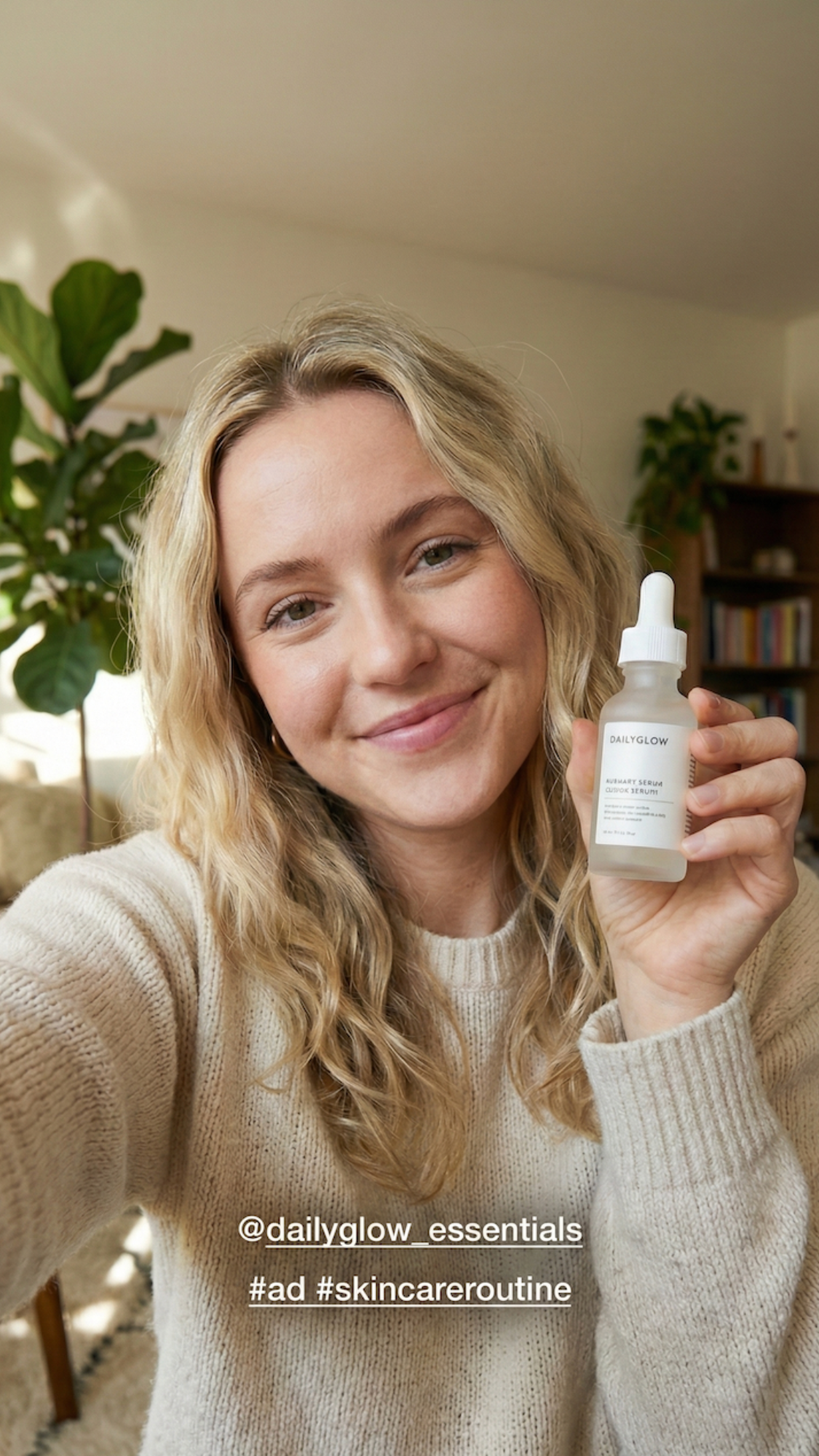 An AI influencer holding a product for e-commerce marketing
You upload a photo of your product. You select your AI influencer. You hit generate. In seconds, you have a polished, realistic image of your digital creator holding your product — exactly how you envisioned it.
No shipping. No scheduling. No renegotiating rates. No waiting.
The same influencer can hold a skincare bottle on Monday and a protein shake on Friday. You can swap colors, change backgrounds, and match any seasonal campaign — all without touching a camera.
Seeing It in Action
The real magic becomes clear when you see the video output. Here's an example of what's possible with Artifluencer's Product in Hand tool — a full UGC-style clip ready for TikTok, Instagram Reels, or paid media:
This kind of content used to require a full production crew. Now it takes a few seconds and a product photo.
Why This Works: The Psychology of UGC
User-generated content outperforms polished brand ads across almost every metric — higher click-through rates, stronger purchase intent, better retention on video. The reason is simple: people trust people.
When a consumer sees someone holding a product, their brain processes it differently than a flat image on a white background. There's implied endorsement. There's context. There's a story.
AI influencers tap directly into this psychology. The content looks like UGC, feels like UGC, and performs like UGC — because the visual cues are identical. The difference is that you control every variable: the creator, the backdrop, the mood, the pose.
The Business Case: Numbers That Matter
Let's talk ROI. A mid-sized DTC brand running product advertising might need:
- 30–50 creative variants per quarter to avoid ad fatigue
- New content every 2–3 weeks to stay fresh on social
- Multiple creators to reach different audience segments
At traditional UGC rates, that's $60,000–$200,000 per year in content production alone — before media spend.
With an AI influencer pipeline, the same output costs a fraction of that. Content that previously took a month to source and produce can be done in an afternoon, with unlimited variants.
Who Is Using This Right Now
The early adopters are predictably fast-moving:
- Supplement and wellness brands generating dozens of creative variants for Meta ads weekly
- Fashion and apparel brands showcasing new drops across multiple AI influencers to hit different demographics
- Beauty and skincare brands creating "unboxing" style content without ever shipping a sample
- Amazon sellers building A+ content and off-platform social proof quickly and cheaply
The common thread? These are brands that move fast and need content infrastructure to match.
Getting Started
If you haven't experimented with AI product-in-hand content yet, the learning curve is minimal. The workflow is:
- Create your AI influencer — choose looks, style, and personality
- Upload your product — a clean image with a transparent background works best
- Generate — get photo and video content in seconds
- Export and publish — content is immediately ready for any platform
The iteration speed is the game-changer. Run an A/B test across 10 creative variants in the time it used to take to brief a single creator.
Product marketing in 2026 rewards brands that can generate great content fast — not just brands with the biggest budgets. AI influencers are the infrastructure that makes that possible.
If you're ready to see what this looks like for your brand, start building your AI influencer today.